“We are not defined by the pieces that broke us, but by the love that chose to place them with purpose. A mosaic is not made despite the fractures; it is made because of them.” – Dr. Steve Hudgins
In a world that still calls them “blended families,” I found myself asking: Blended into what?
For years, both in my therapy office and in my own life, I witnessed families trying to blend and breaking under the pressure. The term itself never sat well with me. It sounded like something was being thrown into a blender: identities, histories, cultures, children, loyalties; all mixed, often with the expectation that everyone would come out smooth, cohesive, and undamaged.
But real families, especially those formed after divorce, loss, or remarriage, do not blend. They rebuild. They carry fractures, fault lines, histories, and healing. And when they do it well, it is not because they erase what came before. It is because they honor each piece, place it with care, and choose love as the glue that holds it all together.
That is when I stopped using the term blended family. And that is when I coined the phrase Mosaic Families.
Why “Mosaic” Is More Than Just a Metaphor
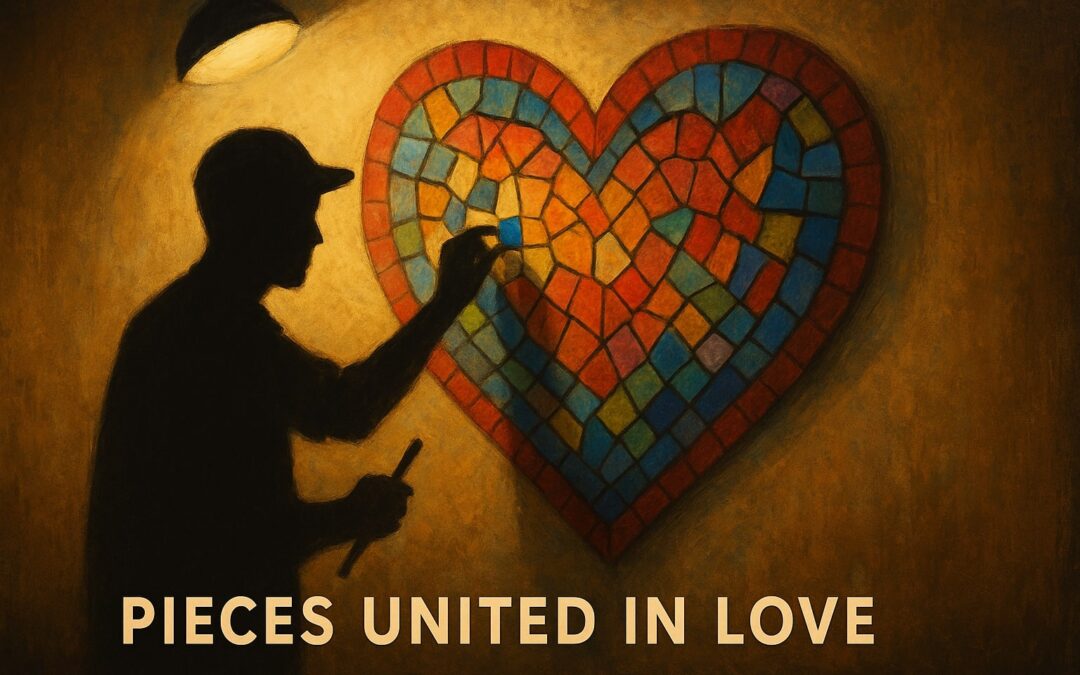
A mosaic is made of broken pieces.
Glass. Stone. Ceramic. Each shard carries its own story, sometimes jagged, sometimes colorful, sometimes scarred. But when arranged intentionally, they form something beautiful. Something more substantial than the original. Something sacred.
Mosaic families do the same.
Rather than forcing everyone to fit a mold or pretending the past did not happen, these families learn to coexist with differences. They value individuality while working toward unity. They allow space for grief, identity, boundaries, and perhaps most powerfully, redemption.
In my personal experience as both a father and a therapist, I have observed how traditional language often falls short in accurately reflecting this process. The word “stepfamily” felt clinical and distant. “Blended family” felt rushed. “Bonus parent” often felt fake. But mosaic? That felt real. Honest. Human. Sacred.
When Families Break, Language Matters
After a divorce, children often feel split. Parents feel guilty. New spouses feel unsure of their role. And faith communities sometimes lack the language to address it with grace.
As a counselor and educator, I realized that without better language, we limit how people see their healing. When we reduce complex families to blended titles, we ignore their depth.
In my research, Sue even expressed, “It always felt like I had to choose sides, like being in one part of the family meant betraying the other part.” Jana, another participant, described it in this way: “We tried to make it feel like a family, but deep down, I think we all knew it wasn’t clicking. It looked right on the outside, but inside it felt forced.”
That is why I developed the Mosaic Family Systems Theory (MFST)—a new way to understand the emotional dynamics, boundary structures, and spiritual healing of families formed through fracture and faith. It integrates psychological insight, systems theory, and Christian principles, while elevating dignity over dysfunction.
Mosaic Families do not pretend. They rebuild—piece by piece.
Mosaic Families Deserve More Than Labels—They Deserve Honor
If you grew up in a divorced home, became a stepparent, remarried, or ever felt like the “outsider” in your own family, you are not alone. Mosaic families are everywhere. However, they often feel unseen by the very systems meant to support them.
Through my book, Piece by Piece: My Blended Experience of Mosaic Family, I hope to give voice to these families, tools to those who serve them, and healing to those still learning how to love again.
Whether you are a therapist, pastor, parent, or adult child trying to make sense of your own family experience, know this:
You are not a leftover from a broken home.
You are a piece of something sacred, forming something new.
Key Takeaways
Mosaic Families are families formed through remarriage, loss, adoption, or restructuring—where each piece is honored, not erased.
The term challenges outdated labels like “stepfamily”, “bonus,” or “blended family,” offering a more dignified and accurate view.
Mosaic Family Systems Theory provides tools for emotional healing, boundary building, and family unity. Real families do not blend. They rebuild—with care, clarity, and commitment.
Mosaic Family is not just repair—it is sacred reconstruction,
❤️ Piece by Piece.