There is a growing movement in our culture that seeks to redefine institutions, relationships, and even the language we use to describe the most fundamental human experiences.
Among those changes is the belief that terms such as “mother” and “father” are outdated relics of a previous era, words that should be replaced with more neutral alternatives in law and public policy.
At first glance, this may appear to be a simple matter of language. It is not.
Language does more than describe reality.
Language shapes how we understand reality.
When society begins to remove words that have carried meaning across generations, it is not merely changing vocabulary. It is changing the framework through which future generations understand family, identity, belonging, and attachment.
Children do not enter the world looking for institutions.
They enter the world looking for connection.
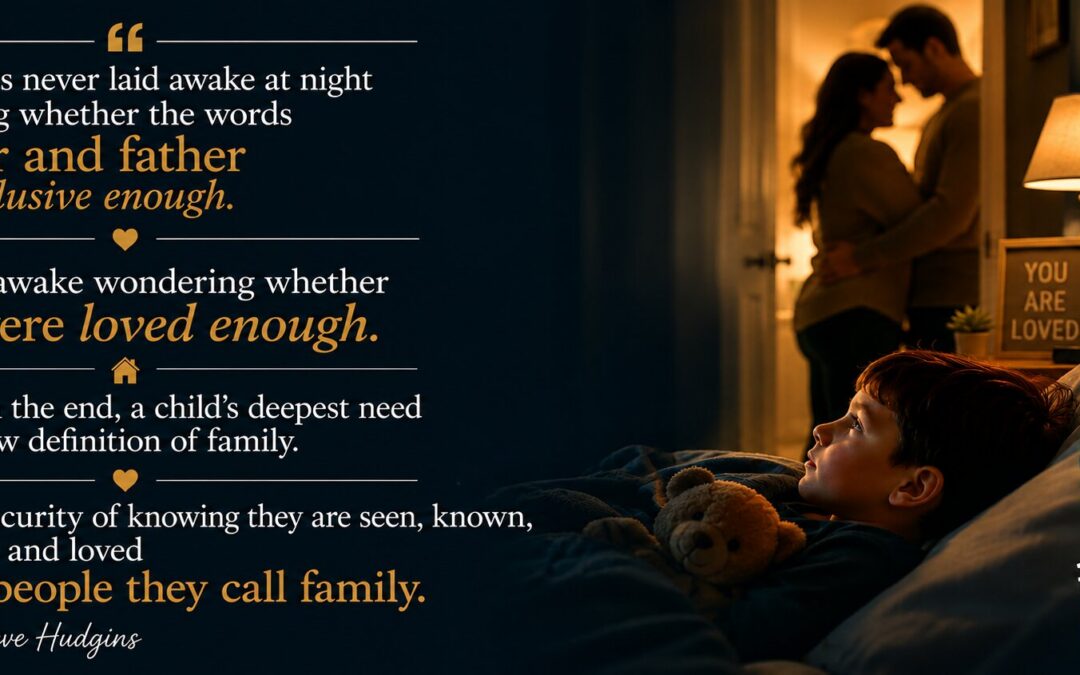
Long before they understand politics, ideology, or social theory, they understand the voice of a mother, the protection of a father, and the security that comes from stable attachment relationships. The family is not simply a social construct. It is the first classroom, the first church, the first source of identity, and often the first place where a child learns what love looks like.
As a therapist, I have spent years listening to stories of wounded families. I have worked with children struggling to understand divorce, parents trying to repair fractured relationships, and adults carrying wounds from childhood into their marriages and parenting. The common theme is not that families are too important. The common theme is that family disruption carries consequences far beyond what most people realize.
What concerns many Americans today is not merely a debate about words.
It is the growing tendency to treat biological realities and family roles as interchangeable concepts rather than meaningful distinctions.
When language that recognizes mothers and fathers is viewed as offensive or outdated, many people see this as part of a broader cultural shift that minimizes the importance of the family itself.
Strong families are not obstacles to progress. They are the foundation upon which healthy societies are built. Research consistently demonstrates that children benefit from stable, nurturing relationships, clear boundaries, secure attachment, and a sense of belonging. These principles remain true regardless of political trends or cultural movements.
The question before us is larger than whether a statute uses one word or another. The deeper question is whether society still recognizes the family as a unique and indispensable institution.
History offers a sobering lesson. Civilizations rarely collapse because they lack technology, wealth, or innovation. More often, they weaken when the institutions that transmit values, identity, responsibility, and belonging begin to erode. The family has always been one of those institutions.
This is not a call to fear. It is a call to remember.
The family is not perfect. It never has been. Yet despite its imperfections, it remains the place where most people first learn trust, sacrifice, accountability, forgiveness, and love.
A society that forgets the value of family may eventually discover that what it considered outdated was actually irreplaceable.
Children do not need a culture that tells them family is optional. They need a culture that reminds them why family matters.