
We have grown into a nation of intolerance.
Someone says something we do not agree with, and we unfriend them.
We label them with a charged word.
We dismiss them rather than sit with them.
What troubles me is not disagreement. Disagreement is necessary in a free society.
What troubles me is that we can no longer come to the table to work on the things that actually matter. We have replaced dialogue with distance and conversation with condemnation.
What is even more alarming is watching this behavior come from people who claim to work in professions of healing. When individuals who speak publicly about trauma, empathy, and care simultaneously spread messages of hatred, ridicule, and ideological contempt, it exposes something deeper. It reveals a darkness of the heart that no credential can hide.
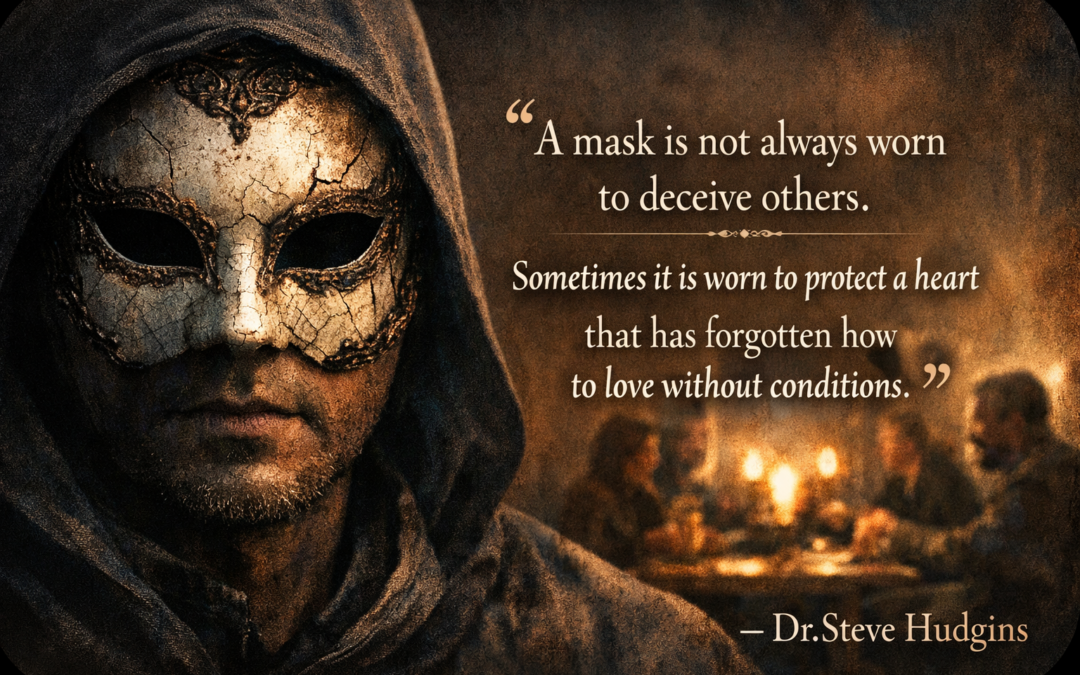
This is where the mask appears.
A mask is not always worn to deceive others. Sometimes it is worn to protect a heart that has forgotten how to love without conditions. We often assume masks belong only to the manipulative or dishonest.
In reality, many masks are worn by people who were hurt, disappointed, or disillusioned and decided that contempt feels safer than compassion. The mask hardens the heart while allowing the person to appear still moral, informed, or righteous.
Yet leadership demands something different.
Recently, I had a powerful conversation with a client whose views are very different from my own.
We did not blur our convictions.
We did not minimize our differences.
But we shared viewpoints honestly.
We listened.
We stayed present.
And in that space, dignity remained intact.
That conversation reminded me that meaningful dialogue does not require agreement. It requires regulation, humility, and courage.
When asked how I cultivate space for dignity and genuine listening, especially when emotional stakes are high, my answer is simple but not easy. That space is built long before the conversation ever begins.
For me, it starts with regulating myself first. I choose restraint over reactivity and curiosity over certainty. When emotions rise, the instinct is to defend a position or win an argument. I intentionally slow that impulse and remind myself that understanding is not the same as agreement, and listening does not require surrendering conviction.
I also work to separate identity from ideology. When people feel that their worth is not on trial, they are far more willing to speak honestly and to listen openly. That means asking clarifying questions instead of rhetorical ones. It means reflecting what I hear without reshaping it to fit my narrative. It means resisting the urge to correct, counter, or perform.
Most importantly, preserving dignity is itself an act of leadership.
If the table collapses, nothing meaningful can be built.
If dignity is lost, no policy, platform, or position can restore it.
When dignity remains intact, even unresolved differences can coexist. And that coexistence is often where real growth begins.
True leadership does not build platforms for applause.
It builds tables for conversation.
It does not forge chains of disparagement.
It builds bridges of hope, freedom, and shared responsibility.
If we cannot disagree without dehumanizing, we are not advancing truth; we are abandoning it. If those in healing professions abandon humility and curiosity, they cease to heal. And if leaders cannot model restraint, courage, and presence, they leave behind noise instead of progress.
The question before us is not who is right.
The question is where leadership will choose to build next, platforms that reward outrage or tables that protect dignity.
Our future depends on who is willing to stay at the table when it would be easier to walk away.